
Transaction Simulation in Rabby Wallet: What It Can Reveal Before You Sign
A common misconception is that transaction simulation is the blockchain equivalent of a crystal ball: press a button, preview the result, and know that a DeFi transaction is safe. The reality is more useful—and more limited. Simulation is best understood as a controlled rehearsal of a proposed transaction under a particular set of blockchain conditions. It can expose unexpected token movements, failed calls, approval consequences, and changes to a wallet’s apparent balances before a user signs. It cannot guarantee that the protocol, website, token, or market will behave safely after the transaction is broadcast.
That distinction matters for anyone using a multi-chain wallet in the United States, where a single browser session may involve Ethereum, layer-2 networks, sidechains, and unfamiliar applications. A wallet such as Rabby can reduce the gap between technical transaction data and a human decision. But the quality of that decision still depends on what is being simulated, which network is selected, how current the chain state is, and whether the user understands what the transaction is intended to do.
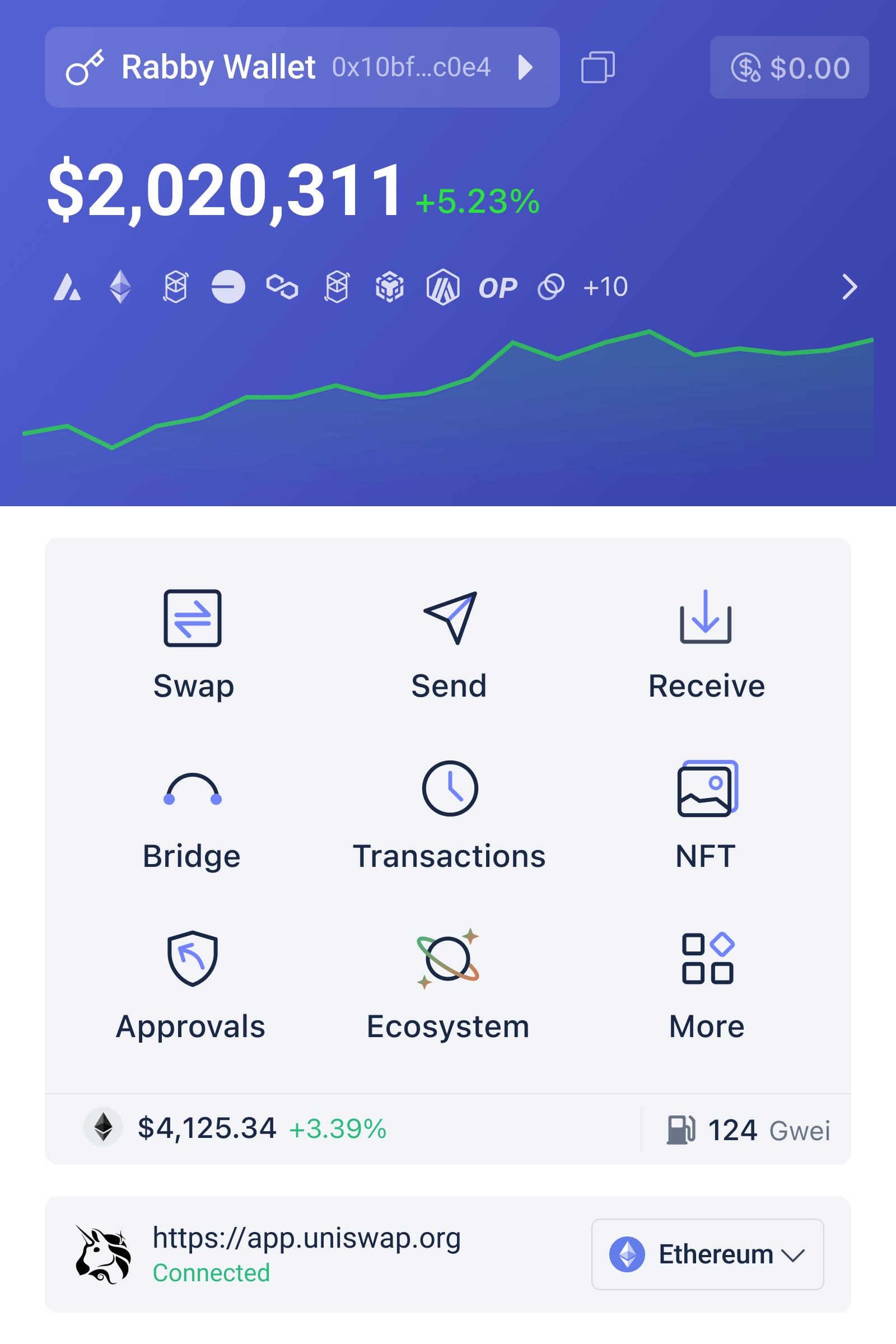
What transaction simulation actually does
A blockchain transaction is not merely a payment instruction. It may call a smart contract, which is software deployed on a network. A decentralized exchange swap, liquidity deposit, staking action, NFT purchase, or token approval can contain several instructions and trigger actions in other contracts. A wallet prepares the transaction with details such as the destination contract, method call, parameters, gas settings, and selected network.
Simulation runs an approximation of that call without committing it to the chain. In practical terms, a simulator asks: if this transaction were executed against the current or recently observed state, what would the contract likely return, and which assets or permissions would change? A wallet may then translate technical outcomes into more readable warnings, such as an expected token transfer, a failed transaction, or an unusually broad approval.
The important mental model is not “safe or unsafe.” It is “what would this instruction do under these assumptions?” That framing is more accurate because a successful simulation only shows that the call can execute in the simulated environment. It does not establish that the user intended to interact with the site, that the contract is trustworthy, or that the quoted exchange rate will still exist when the transaction reaches the network.
Myth one: a successful simulation means the transaction is safe
Simulation is powerful at detecting certain classes of error, but safety has multiple layers. It can help identify a transaction that would revert, meaning the contract would reject it. It may also show that a swap sends one asset and returns another, or that an approval grants a spender authority over a token balance. These are valuable checks because raw contract data is difficult for most users to interpret.
Yet an honest contract can execute a harmful instruction. If a user is tricked into approving a malicious spender, the transaction may simulate perfectly. If a token has transfer restrictions, hidden fees, or unusual administrative controls, a simulation may not communicate the full economic or governance risk. Likewise, a transaction can produce an expected result while exposing the user to later consequences, such as a standing token allowance that remains active after the immediate action.
This is the first boundary condition: execution correctness is not the same as economic or social safety. A transaction can be technically valid, financially unfavorable, and consistent with the code at the same time. Simulation should therefore be treated as one layer of due diligence, alongside checking the application domain, contract address, token identity, expected amounts, and permission scope.
Myth two: multi-chain convenience removes network risk
A multi-chain wallet simplifies access, but it also concentrates the need for careful network selection. The same token symbol may exist on several networks, while bridges and applications may use different contract addresses. A user can hold an asset on one chain and accidentally prepare a transaction on another. Even when a wallet helps distinguish networks, the responsibility to confirm the chain remains with the signer.
For US-based DeFi users, this is especially relevant when moving between a mainnet and lower-cost scaling networks. Lower fees can make experimentation inexpensive, but they can also encourage faster, less deliberate signing. A simulation performed on the wrong chain may still return a coherent result—it is simply answering a different question. Before signing, confirm the network name, the application’s intended chain, the destination contract, and whether the asset being used is the native asset or a token representation.
Multi-chain design also creates a less obvious risk: fragmented context. A wallet may show a combined portfolio view, while the smart contract only sees balances on its own network. The meaningful question is not “do I own this token?” but “which version of this asset is on which chain, and what contract is authorized to move it?” That distinction becomes crucial during swaps, bridge deposits, and token approvals.
Myth three: wallet warnings replace user judgment
Wallet warnings are most useful when they change a vague feeling of risk into a concrete question. Is the transaction sending an asset to an unfamiliar address? Is the approval larger than the amount being spent? Is the contract call interacting with a different token than expected? Does the simulated output differ materially from the application’s displayed quote? These questions turn a warning into an investigation rather than a red light that users habitually dismiss.
For someone installing the browser extension, using the official source and verifying the wallet environment is part of the security process. A convenient starting point for learning how to access the rabby extension should not replace checking the publisher, browser permissions, download destination, and recovery-phrase practices. Never enter a seed phrase into a website or extension setup page that is not the wallet’s trusted recovery flow, and do not treat a familiar logo as proof of authenticity.
The practical value of simulation is highest when the user already knows the intended action. If you expect to swap a specified amount of one token for another, the preview can help confirm whether the proposed transaction matches that expectation. If you cannot describe what should happen in plain language, the correct response to a simulation is not a hurried signature. It is to stop and investigate the application and contract.
How Rabby’s transaction review fits into a broader workflow
Rabby is designed around transaction awareness in a multi-chain setting, including readable previews and risk-oriented checks. The mechanism is conceptually similar to a pre-flight inspection: the wallet examines the transaction request and presents information that may otherwise be hidden inside encoded contract data. This can make a major difference for users who do not read Solidity or decode application calls manually.
Still, a wallet preview is an interface layer over complex infrastructure. The displayed result depends on the simulation provider, the node state, the application’s transaction construction, and the timing between simulation and broadcast. A fast-moving market can change a swap’s execution conditions. A pending transaction can alter available liquidity. A contract may use external data feeds or state that changes between the preview and final execution. These are not reasons to reject simulation; they are reasons to interpret it as time-sensitive evidence.
A useful three-part review is to compare intention, mechanism, and consequence. Intention asks what the application says will happen. Mechanism asks which contracts and permissions the transaction actually invokes. Consequence asks what assets leave the wallet, what assets arrive, and what authority remains afterward. Simulation is strongest at the second and third questions, but the user must connect those answers to the first.
Comparing the main alternatives
Manual contract inspection offers the deepest technical control. An experienced user can inspect verified source code, function parameters, allowance values, and event logs. The trade-off is time and complexity. Source code may be incomplete, difficult to interpret, or unable to reveal off-chain risks such as a compromised website or a misleading token interface. Manual inspection is appropriate for high-value or unusual transactions, but it is not a realistic default for every small swap.
Application-level previews are often easier to understand because the DeFi interface knows the user’s stated goal. A decentralized exchange can show expected output, price impact, minimum received, and route information. The trade-off is that the application has an incentive to present the transaction in its own terms, while the wallet provides a separate security perspective. Comparing both views is stronger than relying exclusively on either one.
External simulation and security tools can add another layer, particularly for complex contract interactions or unfamiliar protocols. Their limitation is that more alerts can produce warning fatigue, and different tools may use different assumptions. A clean result across several tools is informative, not conclusive. The more valuable the transaction, the more important it becomes to understand what each tool actually checked.
A reusable decision framework before signing
Before confirming a transaction, start with the network and account. Verify that the selected chain is the one intended and that the wallet address is the correct one. Next, identify the action: swap, approve, deposit, withdraw, bridge, mint, or something else. Then compare the application’s expected outcome with the wallet’s simulation. If they disagree, treat the difference as a research prompt.
Pay special attention to approvals. An approval is not always the same as a transfer, but it can grant a contract permission to move tokens later. A limited approval generally narrows the potential exposure compared with an unlimited one, although the precise risk depends on the token, spender, and protocol design. After using a protocol, users may also consider whether allowances should be reviewed or revoked through a trusted process; revocation itself is another transaction and therefore has fees and its own signing risks.
Finally, separate transaction risk from protocol risk. Simulation can indicate that a deposit will occur, but it cannot independently establish that the protocol’s accounting is sound, its governance is competent, or its economic model is sustainable. For a small test transaction, a cautious user may value reversibility and limited exposure. For a large position, the standard should be higher: research the contracts, understand liquidity and withdrawal conditions, and avoid treating a polished preview as an audit.
What to watch as wallet intelligence develops
If transaction simulation becomes more widely integrated into wallets, the likely benefit is not that users will stop making mistakes. The more realistic benefit is improved error detection at the moment of signing, when information is most actionable. The open question is whether richer warnings will remain understandable. An interface that reports every theoretical risk may be technically comprehensive but practically ignored.
The useful direction is selective explanation: show the expected asset movements, distinguish permissions from one-time transfers, identify uncertainty in the simulation, and make network context prominent. If wallet designers can do that without encouraging false confidence, simulation may become a standard part of transaction literacy. Until then, the best practice is simple but demanding: use the preview to test whether the transaction matches your intention, then investigate the risks the preview cannot settle.
FAQ: Transaction simulation and Rabby wallet
Can transaction simulation prevent every DeFi scam?
No. It can reveal unexpected execution behavior, failed calls, asset movements, or permissions, but it cannot prove that a website is legitimate, a token is valuable, or a protocol will remain secure. A malicious transaction can simulate successfully if it performs exactly what its code specifies.
Why can a simulation differ from the final transaction?
Blockchain state can change between simulation and broadcast. Liquidity, prices, balances, pending transactions, and contract conditions may move. Network congestion can also affect timing and fees. Treat the preview as a current estimate and recheck the final request before signing.
Is a multi-chain wallet safer than using separate wallets?
It may make network context and transaction review more convenient, but convenience is not the same as lower risk. A multi-chain wallet can reduce friction while increasing the number of networks, token representations, and contracts a user must distinguish. Safety depends on verification habits, not simply on the number of chains supported.
The sharpest misconception to leave behind is that simulation answers the question, “Should I sign?” It answers a narrower and more useful question: “What is this transaction likely to do under the current conditions?” Rabby’s multi-chain transaction review can make that answer easier to read. The final judgment, however, still belongs to the person who understands the intended action, checks the network and permissions, and knows where the simulation’s evidence ends.

Warning: Undefined array key "HAVfwv" in /data/dom/abs.gov.et/httpdocs/wp-content/themes/ogma-news/template-parts/partials/post/related-posts.php on line 1